• Online training login
t: 0330 223 36 86     e: [email protected]
Legionella Control International
  • Home
  • Services
  • Knowledge
  • Legionnaires
  • About
  • Contact
  • Click to open the search input field Click to open the search input field Search
  • Menu Menu
You are here: / Home / Knowledge / Compliance / Do Ice Machines Spread Legionnaires Disease?

Do Ice Machines Spread Legionnaires Disease?
Do Ice Machines Spread Legionnaires Disease?

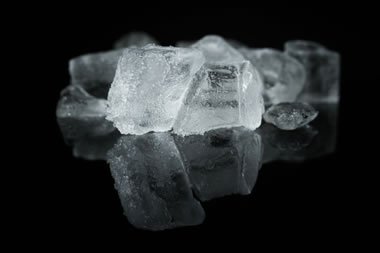
Ice machines and chilled water dispensers are becoming increasingly popular both at home and in the workplace where they are used for a variety of purposes. At first glance, the freezing water temperatures used to create ice would suggest that opportunities for bacterial growth would be very limited and so the risks to people using them insignificant. However, this may not always be the case and here we consider if ice machines can spread Legionnaires’ disease.

What causes Legionnaires’ disease?

Legionella bacteria, the causative organism for Legionnaires’ disease grows most readily in water temperatures of between 20-45 degrees Celsius. If the temperature rises beyond 60 degrees Celsius the bacteria will die. Anything below 20 degrees will cause the bacteria to become dormant. The latter scenario means the bacteria can still multiply if the temperature of the water or ice is raised to 20 degrees or above.

These temperature ranges may suggest that ice machines and chilled water dispensers would be among the safest pieces of equipment to use in terms of legionella risk. However, research has shown there is a risk factor associated with ice dispensers.

  • Learn more about Legionnaires’ disease

How could the cold-water feed become contaminated with legionella?

Ice machines and chilled water dispensers offering ice or cold water do so at temperatures well below the 20-degree threshold for concern. However, each machine contains a mechanical compressor that is used to lower water temperatures. The heat given off by a compressor may be enough to warm the water inside the machine, thereby allowing Legionella bacteria to grow and multiply unseen. The bacteria could then potentially reach levels in the water where it may prove concerning for those drinking it or taking ice from the machine.

A similar scenario could occur if the machine is positioned in a warm spot, i.e. near to a radiator or other source of heat.

Have people died because of legionella contaminated ice machines?

Sadly, yes. One person died in 2013 at the University of Pittsburgh Medical Center in Pittsburgh, USA following exposure to Legionella bacteria via an ice machine. Furthermore, an outbreak at a hospital in Brisbane, Australia was found to be derived from an ice machine.

As with all hot- and cold-water systems, ice machines and dispensers should be regularly checked, cleaned and disinfected to ensure they are safe for use. These machines are common in hospitals throughout the world. This presents an additional problem – Legionnaires’ disease poses a greater risk to those who are elderly, are immunocompromised or have underlying health issues that make them weaker than the general population.

Indeed, one of the cases from Pittsburgh was highlighted when a patient had choked on an ice chip from a machine that was infected with legionella. The risk of aspiration is greater in those who are ill or have health issues that confine them to bed.

How to control legionella risks from ice machines and chilled water dispensers

Research has indicated that while Legionella bacteria becomes dormant at low temperatures, it can become active if it is released in ice which then subsequently thaws. Since this often occurs with ice machines, the potential danger is clear. An assessment of the risk followed by regular checks, cleaning and disinfecting processes should assist in minimising the risks from Legionnaires’ disease.

  • Assessing the risks from legionella

International legionella and water safety specialists

Our teams of water safety specialists support those responsible for the control of waterborne pathogens including Legionella bacteria in the workplace, helping them to protect their people and meet their health and safety obligations in this specialist area. We deliver professional water safety legionella risk assessments, water testing, independent compliance auditing, City & Guilds training and other environmental risk management services that help keep staff and others safe.

If you have questions about any of the issues raised above or you would like to speak with one of our legionella specialists please call us today on 0330 223 36 87 or contact us here.

Search Search

Expert resources…

  • Legionella & other pathogens
  • Regulatory compliance
  • Expert guidance
  • International
  • Legionnaires’ disease
  • Legionella training
  • Glossary of terms
  • FAQ
  • News

REVIEWS

4.8
Legionella Control International is rated 4.8 out of 5 stars (based on 182 customer reviews)
Read our reviews

Get in touch...

Legionella Control International
Warren Bruce Court
Warren Bruce Road
Manchester M17 1LB
United Kingdom

Manchester: +44 (0) 161 877 05 86
London: +44 (0) 203 637 47 48
Email: [email protected]

Legionella newsletter...

A simple and convenient way of keeping up to date with the latest Legionella news, new legislation, best practice, R&D and much more…

Useful downloads…

  • HSE ACOP L8 – Control of Legionella
  • HSG274 Part 1 – Evaporative Cooling
  • HSG274 Part 2 – Hot & Cold
  • HSG274 Part 3 – Other Risks
  • Positive Legionella Tests – What To Do?
  • HSG282 – Spa Pools
  • Legionnaires’ – Duty Holders Guide
  • Health & Safety – Care Homes
  • Scalding Risks – Health & Social Care
            © Copyright 2026 - Legionella Control International Ltd.
  • Link to X
  • Link to Facebook
  • Link to LinkedIn
  • Home
  • About
  • Contact
  • FAQ
  • Disclaimer
  • Privacy
  • Modern Slavery
  • Reviews
  • Sitemap
Link to: Controlling Legionella in Paper Mills Link to: Controlling Legionella in Paper Mills Controlling Legionella in Paper MillsControlling Legionella in Paper Mill Water Systems Link to: Practical Guide to Controlling Legionella in Water Systems Link to: Practical Guide to Controlling Legionella in Water Systems Practical Guide to Controlling Legionella in Water SystemsPractical Guide to Controlling Legionella in Water Systems
Scroll to top Scroll to top Scroll to top

This site uses cookies. By continuing to browse the site, you are agreeing to our use of cookies.

OKLearn more

Cookie and Privacy Settings


How we use cookies

We may request cookies to be set on your device. We use cookies to let us know when you visit our websites, how you interact with us, to enrich your user experience, and to customize your relationship with our website.

Click on the different category headings to find out more. You can also change some of your preferences. Note that blocking some types of cookies may impact your experience on our websites and the services we are able to offer.

Essential Website Cookies

These cookies are strictly necessary to provide you with services available through our website and to use some of its features.

Because these cookies are strictly necessary to deliver the website, refusing them will have impact how our site functions. You always can block or delete cookies by changing your browser settings and force blocking all cookies on this website. But this will always prompt you to accept/refuse cookies when revisiting our site.

We fully respect if you want to refuse cookies but to avoid asking you again and again kindly allow us to store a cookie for that. You are free to opt out any time or opt in for other cookies to get a better experience. If you refuse cookies we will remove all set cookies in our domain.

We provide you with a list of stored cookies on your computer in our domain so you can check what we stored. Due to security reasons we are not able to show or modify cookies from other domains. You can check these in your browser security settings.

Google Analytics Cookies

These cookies collect information that is used either in aggregate form to help us understand how our website is being used or how effective our marketing campaigns are, or to help us customize our website and application for you in order to enhance your experience.

If you do not want that we track your visit to our site you can disable tracking in your browser here:

Other external services

We also use different external services like Google Webfonts, Google Maps, and external Video providers. Since these providers may collect personal data like your IP address we allow you to block them here. Please be aware that this might heavily reduce the functionality and appearance of our site. Changes will take effect once you reload the page.

Google Webfont Settings:

Google Map Settings:

Google reCaptcha Settings:

Vimeo and Youtube video embeds:

Other cookies

The following cookies are also needed - You can choose if you want to allow them:

    Download our Legionella Risk Assessment Checklist for business owners, landlords, property managers and health and safety specialists and start managing your legionella risk today.