
Controlling Legionella on Ships, Ferries & Maritime Vessels
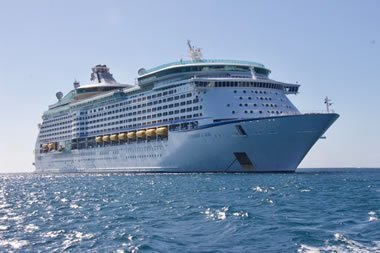
This expert guide from our water safety specialists looks at the control of legionella on ships, ferries and other maritime vessels. The guide considers the water safety risks that can arise on-board different vessels, the need to consider dry dock safety, why a detailed risk assessment and Water Safety Plan are essential, and concludes by outlining the potential consequences following an outbreak of Legionnaires’ disease.
When we hear about outbreaks of Legionnaires’ disease, we tend to associate them with scenarios that occur on land – in hotels, hospitals, leisure centres etc. However, there are similar opportunities for Legionella bacteria to grow and spread at sea too. Ships, ferries, cruise liners and other maritime vessels of all shapes and sizes can be affected, and as such must take suitable precautions to make sure their water systems are safe for those who use them or are exposed to them.
What is Legionnaires’ disease?
Legionnaires’ disease is a serious lung infection caused when a person inhales water droplets contaminated with Legionella bacteria. It’s uncommon but can be very serious.
You can’t catch Legionnaires’ disease from drinking contaminated water or from person-to-person contact. Instead, most people catch the disease from breathing in legionella contaminated water droplets. Adults over 45, smokers and people with compromised immune systems tend to be more susceptible to infection.
Controlling legionella on ships & other maritime vessels
Here we highlight issues associated with the control of legionella on ships, ferries and other maritime vessels and the potential hazards that may be present on each.
Legionella on ferries
Ferries are used for regular journeys that are often completed in only a few hours. While few people spend a long time on board, it only takes a brief exposure to legionella-carrying mist or water vapour for someone to contract Legionnaires’ disease or Pontiac fever.
Many ferries can be several years old too, and indeed one body of research discovered that out of 10 ferries tested, 70% of them tested positive for the more serious serogroup 1 strain of Legionella pneumophila, and 80% tested positively for the sg 2-14 strain. It would appear smaller ships and maritime vessels such as ferries can be at risk from legionella contamination in some scenarios.
One third of cruise ships tested positive for legionella
The legionella research mentioned above also tested six cruise ships for the same strains of Legionella bacteria (serogroup 1 and serogroups 2-14). While the sample was understandably small, and those ships that tested legionella positive were smaller in number, it still highlighted that one third of the cruise ships tested positive for the more dangerous serogroup 1 and just over 16% for sg 2-14.
Many companies invest in the newest, biggest, and grandest cruise ships, so it would make sense they should be safer than ships that are older and rely on older plumbing and water services. However, it also indicates there is still a vital need for cruise liners to pay close attention to the condition and treatment of their water systems to ensure the risks associated with legionella are properly managed. Thousands of people are exposed to them while on board, not to mention other water systems such as showers, spa pools and hot tubs, swimming pools, and fountains.
Water quality on off-shore vessels
Off-shore vessels may be involved in various marine related industries, but in each case the vessel is usually designed to remain at sea for long periods of time so maintaining water quality is important.
There have been cases on board such ships where people have fallen ill after coming into contact with potable water sources that had not been checked or decontaminated in a long time. This is particularly dangerous if the vessel is out of commission for a while and is not thoroughly checked, cleaned, and maintained prior to being put into action again.
Are there legionella risks with smaller pleasure vessels?
It is easy to assume the bigger risks lie with the larger ships and vessels, yet this may not always be true. Many cruise ships that offer accommodation to thousands of people are newly built and use modern techniques and methods that limit the potential for any harmful bacteria and other waterborne pathogens to spread. Water systems can be designed and built to be as safe as possible but still need effective management and control practices to keep them safe.
However, that may not be true of smaller pleasure vessels. Consider how many barges, narrowboats, yachts, and motorboats are rented out for people to use and enjoy each year. They must surely number in their thousands, and yet there is a chance that some commercial boat owners and operators may not be aware they are responsible for the control of legionella and the maintenance of the water systems on board to ensure the safety of people using the vessel.
The dangers of legionella in dry dock
Some ships may periodically be required to be taken into dry dock for maintenance or repair purposes. If this should occur, it is important that appropriate action and preventative measures should be taken prior to anyone working on the vessel. Otherwise, those individuals could also be put at risk while cleaning the water systems or making any changes to it.
How to control legionella on ships, ferries & other maritime vessels
A legionella risk assessment and accompanying management scheme of control for legionella is required by all businesses with premises on dry land – in the UK this is a legal requirement. Similarly, the same approach should be adopted by those in charge of ships and other maritime vessels. Ship owners and operators should look to create a Water Safety Plan for each of their ships/vessels which will identify the risks and how these should be managed to protect the safety of people.
Water Safety Plan for ships
If legionella is permitted to multiply inside any water system (on land or at sea), those nearby are at risk if they inhale contaminated water droplets, vapour or mist emitted by that system. This means all ship owners or operators of maritime vessels should ensure they have a thorough Water Safety Plan in place. There should be a separate plan for each ship or boat if more than one is involved. Just as different buildings or water towers have their own quirks and differences, so too do waterborne vessels.
Dealing with an outbreak of Legionnaires’ disease
The potential fallout from an outbreak of Legionnaires’ disease on board anything from a small pleasure boat to a large cruise ship is unthinkable. An outbreak of the disease could occur quickly, with anything from a handful of people to many hundreds affected. In either case, the business that owns the ship or vessel, and their managers could be at risk from being prosecuted by the authorities or even sued by everyone affected. The reputational damage to the businesses involved could also be significant. Far better to take steps to mitigate all potential legionella and water safety risks before such a scenario ever has the chance to play itself out. The potential loss of life and illness could affect far more than could ever be imagined if that were to occur.
Legionella control water safety specialists for the maritime sector
Our teams of water safety specialists support those responsible for the control of waterborne pathogens including Legionella bacteria on land and at sea, helping ship owners and managers to protect their people, passengers and others to meet their health and safety obligations in this specialist area. We deliver professional maritime water safety risk assessments for legionella, pseudomonas and other waterborne pathogens, water testing, independent compliance auditing, City & Guilds training and other environmental risk management services that help keep staff and others safe.
If you have questions about any of the issues raised above or you would like to speak with one of our marine specialists please call us today on 0330 223 36 87 or contact us here.

