
What Temperature Kills Legionella Bacteria in Water?
 Legionella bacteria are present in many water sources. This includes natural sources, although they do not usually present any issues when in lakes or rivers as they are only there in small quantities.
Most of the time, low concentrations of legionella bacteria do not cause any issues when present in manmade water supplies either. However, there is a significant caveat to that statement. The water supply must be managed, monitored and maintained to ensure the bacteria do not get the opportunity to take a foothold in the system. It is usually straightforward to follow common sense and established safety rules to ensure this does not happen… although if you’re in any doubt the UK’s Health and Safety Executive offer excellent advice and guidance in their ACOP L8 and HSG274 documents.
In this article, we’ll look at the role temperature plays in influencing whether legionella may get the opportunity to colonise a water system, and highlight what temperatures are required to kill legionella bacteria in water systems.
A version of this article on the relationship between hot and cold water temperatures and the control of legionella bacteria appeared in Legionella Control International’s newsletter. To get it in your inbox, sign up for free here.
Why is it important to control legionella bacteria?
Legionella bacteria can enter a manmade water system in many ways. Indeed, it is almost impossible to prevent this from happening. However, there are many things we can do to make sure water systems are not at risk of legionella bacteria growing and spreading throughout the system. If this occurs, the risks to safety increase, and people using the water or who are in the vicinity of it may be at risk of developing Legionnaires’ disease.
This disease can be fatal and can occur when someone is exposed to legionella bacteria. It is a potentially serious infection of the lungs, caused when someone inhales the bacteria via water droplets suspended in the air, called an aerosol. Any source of water that generates a spray or mist can therefore be a risk. Anything from a shower head, spray tap to a water tower or even an ornamental fountain can generate spray, so it is important to conduct a legionella risk assessment to be sure the risk is minimal, and that where risks are identified, you implement appropriate precautions to control them.
What is a legionella risk assessment?
What temperature kills legionella bacteria in water?
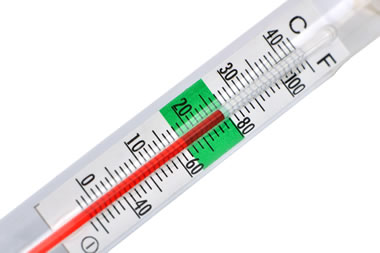
Legionella bacteria prefer to live in the ideal temperature zone of between 20 and 45 degrees Celsius. This means hot water should be above the upper level and cold water should be below the lower level. If this does not happen, and water is allowed to sit within that range, legionella bacteria will begin to thrive and multiply in the water system.
To provide more detail on water temperatures, it is important that cold water is stored below 20 degrees Celsius. Lower temperatures will cause the bacteria to go into a state resembling hibernation. This means the bacteria do not die, but they also cannot multiply and spread through the system.
At the other end of the scale, hot water should be stored well above 50 degrees Celsius. In fact, the Health and Safety Executive require that hot water is always stored above 60 degrees. That’s because legionella bacteria cannot survive at that temperature, and so the risk is significantly reduced. However, water at this temperature would be too hot to use, so it is wise to store hot water at 60 degrees Celsius, making sure that it falls to a minimum of 50 degrees Celsius (55 degrees Celsius in healthcare scenarios) at the point of delivery, i.e., a tap or shower head. Where vulnerable people may use these water outlets consideration should be given to the installation of Thermostatic Control Valves or TMVs which will help to regulate the water temperatures and so prevent scalding accidents.
Do you need to test water temperatures as part of a legionella control programme?
Yes, testing water temperatures should be done as part of your regular maintenance and checks on the water system if you are responsible for this as part of your role. Cold water storage tanks are recommended to be inspected every six months, according to information from the Health and Safety Executive. Temperatures should be checked at the ball valve outlet.
Legionella bacteria prefer to live in the ideal temperature zone of between 20 and 45 degrees Celsius
More frequent temperature checks should be done monthly at sentinel outlets. The cold water at a sentinel tap should be run for two minutes and the temperature should be noted as below 20 degrees Celsius. Make a note of all outlets and rotate them as part of your regular checks.
Tests should also be done on hot water storage and outlets. Flow and return temperatures for calorifiers should always be at least 60 degrees Celsius. Hot water should be stored at 60 degrees Celsius or above, as noted earlier. It should also be noted to be at least 50 degrees Celsius (55 degrees Celsius in healthcare) when measured from a tap. Again, a plan should be used and different outlets should be tested each month for the hot and cold water system. All results should be recorded in the water safety logbook for future reference. This ensures that all water outlets will be regularly tested and confirmed to be within safe limits.
If the hot water is found to not be hot enough or the cold water is found to be too warm, remedial actions should be taken to ensure the temperature of each comes back into a safe range. Again, any remedial actions should be recorded.
Regular monthly testing is the best way to make sure the water temperatures are kept at safe levels. It is also a good idea to perform a visual check of the system at this time, to note any low use outlets, and maintenance or cleaning that may be required.
It is also important to make sure that whoever is testing the water temperatures is properly trained and experienced in understanding the control legionella and the risks posed if it were to colonise a manmade water system.
World leading legionella risk management specialists
The water safety specialists at Legionella Control International help business owners and those responsible for the control of legionella and other waterborne pathogens manage their workplace risks to maintain regulatory compliance and keep people safe.
We are experienced water safety specialists and deliver full range of services including risk assessments for legionella, pseudomonas and other waterborne pathogens. We also offer Authorising Engineer support, compliance auditing, water quality testing, City & Guilds training and other health and safety risk management services that help keep staff and others safe.
If you would like to speak with one of our legionella specialists about improving your risk management processes call us today on 0330 223 36 86 or contact us here …

