• Online training login
t: 0330 223 36 86     e: [email protected]
Legionella Control International
  • Home
  • Services
  • Knowledge
  • Legionnaires
  • About
  • Contact
  • Click to open the search input field Click to open the search input field Search
  • Menu Menu
You are here: / Home / Knowledge / Guidance / Can Hospital Sinks Harbour Dangerous Bacteria?

Can Hospital Sinks Harbour Dangerous Bacteria?
Can Hospital Sinks Harbour Dangerous Bacteria?

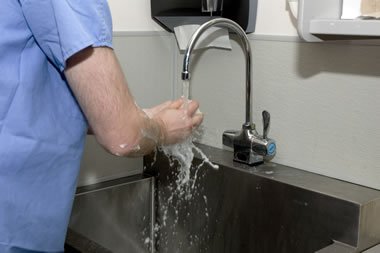
As awareness of the benefits of good hygiene, and in particular hand hygiene has increased in hospitals and other healthcare environments we have seen a corresponding rise in the number of sinks available for staff, patients and visitors. This is because germs and bacteria can easily be transmitted from one person to another via their hands. Therefore, it makes good sense that additional sinks and wash facilities can help to keep people’s hands clean and so reduce the number of instances where this unwanted transmission can occur.

    • What’s the best handwashing technique?

However, the reality has proven to be somewhat different. The intention behind the idea of installing additional hospital sinks and therefore making it easier for handwashing to become more frequent is honest and admirable. Yet the outcome has seen the spread of potentially dangerous bacteria in and around sinks leading to some serious outbreaks of illness in hospitals around the world.

Hospital sinks are closely linked with some outbreaks of infection and illness

The link between contaminated hospital sinks and outbreaks of infection has been proven time and again in recent years. Whenever an outbreak occurs in a hospital, local infection control teams work hard to identify the source so preventive action can be taken quickly. Frequently (although not always), the source of the infection can be traced to one or more sinks that have become contaminated.

Such experiences led to a seemingly-extreme measure being taken in one hospital in the Netherlands. The hospital staff decided to remove the sinks in patient areas in the intensive care unit to try and stop bacteria from spreading as quickly as it previously was. The removal of the sinks had the desired effect – flying in the face of the idea that more sinks were required to help reduce contamination and transmission of dangerous germs and bacteria in hospital settings.

Why are hospital sinks potentially dangerous when it comes to bacteria?

Biofilms, often seen as the slimy coating on pipes and other hard surfaces can harbour communities of bacteria and other microorganisms. Such biofilms can colonise the internal surfaces of pipes, drains, sink traps and even the sinks themselves causing contamination and the potential for bacteria and other germs to spread. The biofilms are often very difficult to remove and even with regular cleaning and disinfecting, it may not be possible to get rid of them completely.

    • What are biofilms?

Who is at risk?

Most people are fit and healthy enough to combat bacteria when they encounter it, especially if they are washing their hands and keeping their surroundings clean. However, transfer that situation to a hospital – either in a ward, an augmented care unit or anywhere else where people are sick, immunocompromised, or have undergone an operation or other form of treatment – and the danger is clear. Bacteria is more likely to affect and cause infection in people with depressed immune systems. Some outbreaks have led to serious illness and even death among those involved.

Making sinks safer

It’s clear that we need to identify how hospital sinks can be made safer, but also how we can use them to support good hand hygiene habits without exacerbating the problems associated with transmission of bacteria.

We tend to assume things washed down the sink are gone. Yet the evidence suggests that is not the case, and bacteria may simply be there waiting for its next opportunity to find a host

World-leading water safety specialists

Our teams of water safety specialists support those responsible for the control of legionella and other waterborne pathogens in hospitals and healthcare environments across all regions of the UK and internationally. We deliver professional water safety solutions, water testing, independent compliance auditing, City & Guilds training and other environmental risk management services.

If you have questions about any of the issues raised above or you would like to speak with one of our specialists please call us today on 0330 223 36 87 or contact us here.

Search Search

Expert resources…

  • Legionella & other pathogens
  • Regulatory compliance
  • Expert guidance
  • International
  • Legionnaires’ disease
  • Legionella training
  • Glossary of terms
  • FAQ
  • News

REVIEWS

4.8
Legionella Control International is rated 4.8 out of 5 stars (based on 182 customer reviews)
Read our reviews

Get in touch...

Legionella Control International
Warren Bruce Court
Warren Bruce Road
Manchester M17 1LB
United Kingdom

Manchester: +44 (0) 161 877 05 86
London: +44 (0) 203 637 47 48
Email: [email protected]

Legionella newsletter...

A simple and convenient way of keeping up to date with the latest Legionella news, new legislation, best practice, R&D and much more…

Useful downloads…

  • HSE ACOP L8 – Control of Legionella
  • HSG274 Part 1 – Evaporative Cooling
  • HSG274 Part 2 – Hot & Cold
  • HSG274 Part 3 – Other Risks
  • Positive Legionella Tests – What To Do?
  • HSG282 – Spa Pools
  • Legionnaires’ – Duty Holders Guide
  • Health & Safety – Care Homes
  • Scalding Risks – Health & Social Care
            © Copyright 2026 - Legionella Control International Ltd.
  • Link to X
  • Link to Facebook
  • Link to LinkedIn
  • Home
  • About
  • Contact
  • FAQ
  • Disclaimer
  • Privacy
  • Modern Slavery
  • Reviews
  • Sitemap
Link to: Can You Insure Against Legionnaires Disease? Link to: Can You Insure Against Legionnaires Disease? Can You Insure Against Legionnaires Disease?Can You Insure Against Legionnaires’ Disease Link to: Mycobacteria in Water: Things to Be Aware Of Link to: Mycobacteria in Water: Things to Be Aware Of Mycobacteria in waterMycobacteria in Water: Things to Be Aware Of
Scroll to top Scroll to top Scroll to top

This site uses cookies. By continuing to browse the site, you are agreeing to our use of cookies.

OKLearn more

Cookie and Privacy Settings


How we use cookies

We may request cookies to be set on your device. We use cookies to let us know when you visit our websites, how you interact with us, to enrich your user experience, and to customize your relationship with our website.

Click on the different category headings to find out more. You can also change some of your preferences. Note that blocking some types of cookies may impact your experience on our websites and the services we are able to offer.

Essential Website Cookies

These cookies are strictly necessary to provide you with services available through our website and to use some of its features.

Because these cookies are strictly necessary to deliver the website, refusing them will have impact how our site functions. You always can block or delete cookies by changing your browser settings and force blocking all cookies on this website. But this will always prompt you to accept/refuse cookies when revisiting our site.

We fully respect if you want to refuse cookies but to avoid asking you again and again kindly allow us to store a cookie for that. You are free to opt out any time or opt in for other cookies to get a better experience. If you refuse cookies we will remove all set cookies in our domain.

We provide you with a list of stored cookies on your computer in our domain so you can check what we stored. Due to security reasons we are not able to show or modify cookies from other domains. You can check these in your browser security settings.

Google Analytics Cookies

These cookies collect information that is used either in aggregate form to help us understand how our website is being used or how effective our marketing campaigns are, or to help us customize our website and application for you in order to enhance your experience.

If you do not want that we track your visit to our site you can disable tracking in your browser here:

Other external services

We also use different external services like Google Webfonts, Google Maps, and external Video providers. Since these providers may collect personal data like your IP address we allow you to block them here. Please be aware that this might heavily reduce the functionality and appearance of our site. Changes will take effect once you reload the page.

Google Webfont Settings:

Google Map Settings:

Google reCaptcha Settings:

Vimeo and Youtube video embeds:

Other cookies

The following cookies are also needed - You can choose if you want to allow them:

    Download our Legionella Risk Assessment Checklist for business owners, landlords, property managers and health and safety specialists and start managing your legionella risk today.