
How to Check Water Temperatures to Minimise the Risk of Legionella Bacteria
 Maintaining the right water temperatures is a critical part of controlling the risk of Legionella bacteria, which can cause serious illnesses such as Legionnaires’ disease. Legionella thrives in warm water environments, particularly between 20°C and 45°C, making it essential to regularly monitor and manage both hot and cold water systems to keep conditions outside of this danger zone. Simple, routine temperature checks form a key part of any water safety plan and are required under UK health and safety regulations.
This article explains how to check water temperatures accurately and effectively to minimise Legionella risks. It covers when and where to test, how to interpret results, and what to do if temperatures fall outside recommended ranges. It also includes specific guidance for testing taps, calorifiers, and cold water tanks, and emphasises the importance of record-keeping and compliance. Whether you’re a facilities manager, building operator, or maintenance professional, this guide provides practical steps to ensure your water systems remain safe and compliant.
Why are hot and cold water temperatures important for the control of Legionella?
Legionellosis is a condition caused by Legionella bacteria, and it affects the respiratory system. The more serious form of the condition is known as Legionnaires’ disease which is a serious infection of the lungs. It is usually caught by breathing in small droplets of contaminated water.
Legionella bacteria can spread in man-made hot and cold water systems if the water temperature allows this to happen. The prime temperature for the bacteria to proliferate at is between 20 – 45 degrees Celsius (68-113 F).
How to check water temperatures
Hot and cold water temperatures should be checked monthly at various points throughout the water system. These temperatures should then be recorded so they can be monitored over time to help improve the management of Legionella risks and the control processes in place. These records should be kept safely for at least five years.
Checking the temperature from the hot taps
Using an accurate thermometer, check the water flow from a chosen hot tap. When doing this for the first time, the tap furthest away from the calorifier/water heater/boiler should be chosen, this is sometimes called a sentinel outlet.
Other representative points can then also be checked in a chosen pattern, eventually repeating the pattern so different taps are checked monthly.
Here are the main points to note:
- Hold the thermometer in the hot water flow for one minute
- Record the temperature on the thermometer
- It should be a minimum of 50 degrees Celsius after one minute
- If it is below this, advise whoever oversees the site so the necessary actions can be taken to remedy the issue
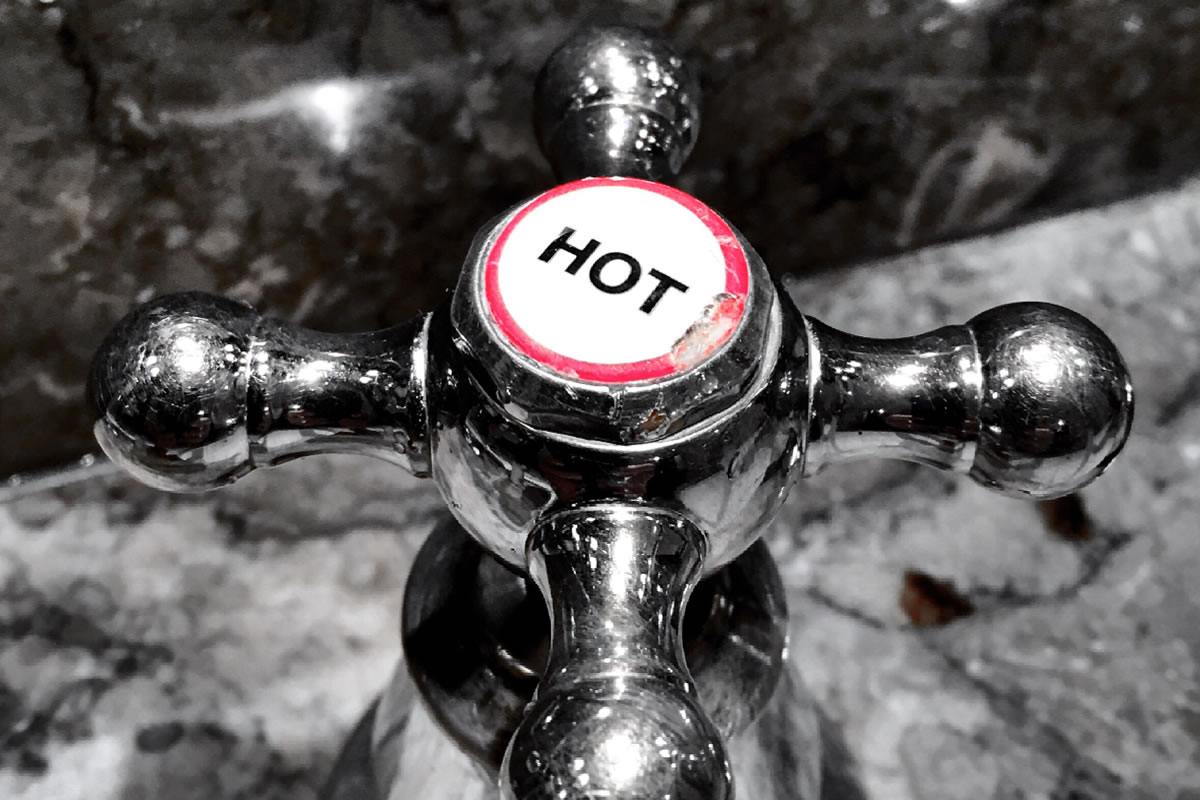
If thermostatic mixing valves (TMVs) are fitted, these ensure the temperature never exceeds 44 degrees Celsius primarily to prevent hot water scalding. In this case, the hot water inlet to the TMV should be checked instead of the hot taps. Again, a minimum of 50 degrees Celsius should be recorded in this instance.
With a TMV fitted water temperatures at the hot tap should not exceed 44 degrees Celsius.
Checking the temperature from water heaters (calorifiers)
On a monthly basis check the water flow and return temperatures at water heaters (calorifiers). One way of measuring these temperatures is to use a surface temperature probe. The outgoing water should be at least 60 °C in order to kill Legionella bacteria.
Temperatures from cold taps
A similar pattern should be followed to that described for hot water above. Formulate a pattern for rotating through different cold taps each month:
- Hold the thermometer in the cold water flow for two minutes
- Record the temperature after two minutes
- It should be a maximum of 20 degrees Celsius or below
- Report and action as above if it goes above this
Other water checks to make
Make a monthly check of water temperatures of the flow and return from and to the calorifier (see above).
Every six months, you must also check the water temperature in the cold water storage tank:
- Check temperature at ball valve
- Check mains water temperature going into the tank
- Confirm and record temperatures as shown on the thermometer on the tank, if it has one
Keeping accurate records is of paramount importance.
Make sure it is clear which taps or tanks were checked each time, where they are, who checked them, when they were checked, and anything that was amiss and what was done to remedy it.
Practical workshop training for routine Legionella monitoring tasks
To help people involved in the routine monitoring and maintenance of water systems we offer a practical Legionella training course designed specifically for those who want to learn how to perform various monitoring and maintenance tasks required as part of an ACOP L8 Legionella control and compliance programme …
This course is ideal for facilities managers, caretakers, building managers, plumbers, maintenance and engineering contractors… in fact anyone with responsibility for the monitoring, inspection and maintenance of hot and cold water systems.
This task based Legionella training course shows you how to perform a number of practical, but important routine Legionella, water safety monitoring and maintenance tasks on hot and cold water systems… all in accordance with COSHH, the Health & Safety Executives ACOP L8, HSG274 and the Department of Health’s HTM 04-01 … practical training >>
Further information, advice and support
If you require further information about our practical training course or advice about the control of Legionella and the risks from Legionnaires’ disease call us today on 0330 223 36 86 or get in touch here … contact us

