• Online training login
t: 0330 223 36 86     e: [email protected]
Legionella Control International
  • Home
  • Services
  • Knowledge
  • Legionnaires
  • About
  • Contact
  • Click to open the search input field Click to open the search input field Search
  • Menu Menu
You are here: / Home / Knowledge / Compliance / How Temperature Influences Legionella Growth

How Temperature Influences Legionella Growth
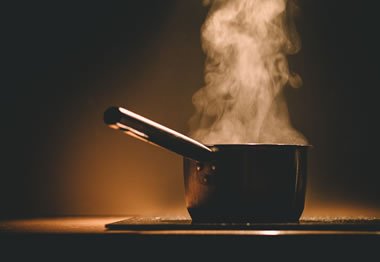
How temperature influences legionella growth

In this review the experts at Legionella Control International look at how water temperatures influence legionella growth and how this information can be used to control the risks from the bacteria.

Under certain circumstances Legionella bacteria can lead to serious illness and fatalities in humans. Since Legionella bacteria can exist in man-made water systems, it is imperative to ensure the water is stored, maintained and distributed at temperatures that do not encourage the growth and spread of the bacteria.

There are three temperature ranges that have an influence on the growth and proliferation of Legionella bacteria. We’ll look at each of these below.

Can legionella grow in cold water?

Contrary to what some may believe, Legionella bacteria do not die off as water temperatures drop below 20 degrees Celsius. Instead, they become inactive and unlikely to cause harm. It’s also important to remember that they do not multiply while in this state.

However, if water at this temperature is released for use and it is warmed during that process, it may lead to some potential for Legionella bacteria to cause harm. A risk assessment should consider whether that is the case.

  • Learn more about the legionella risk assessment process

What happens to legionella at temperatures of between 20 and 45 degrees Celsius?

Water temperatures between 20 and 45 degrees Celsius provide the ideal range to allow the bacteria to grow and multiply. If Legionella are permitted to remain in water at this temperature, the whole water system concerned is at risk of infection, and this can occur very quickly. This puts anyone who uses the water system at potential risk from Legionnaires’ disease.

How do you kill legionella?

Once hot water temperatures reach 50 degrees, the Legionella bacteria will begin to die off. The speed at which this occurs depends on how high the temperature goes, the hotter the temperature the more effective the kill rate.

A two-hour period where the water is maintained at 50 degrees Celsius will get rid of 90% of the bacteria. If the temperature of the water is raised to 60 degrees Celsius, the same percentage of bacteria will die in just two minutes. Raise that temperature again to hit 70 degrees Celsius and all the Legionella bacteria present will die straightaway.

What are the official guidelines on water temperatures?

In the UK all water should be kept above or below the optimum range mentioned above.

Hot water supplies should be stored at a minimum of 60 degrees Celsius.

Typically, any hot water that comes back into the heating system should achieve a minimum temperature of 50 degrees Celsius to keep it above the risk zone. In hospitals and healthcare environments the water return temperatures should be at least 55 degrees Celsius.

Similarly, cold water supplies should never go above 20 degrees Celsius. Again, the idea is to ensure all supplies remain outside the danger zone.

What is thermal disinfection?

Thermal disinfection involves keeping the cold water below 20, and the hot water hot at a minimum of 50 degrees Celsius (55 degrees Celsius in healthcare). If this is achieved, the risk of Legionella bacteria having the opportunity to grow and spread in a water system will be significantly reduced.

International legionella and water safety specialists

Our teams of water safety specialists support those responsible for the control of waterborne pathogens including Legionella bacteria in the workplace, helping them to protect their people and meet their health and safety obligations in this specialist area. We deliver professional water safety legionella risk assessments, water testing, independent compliance auditing, City & Guilds training and other environmental risk management services that help keep staff and others safe.

If you have questions about any of the issues raised above or you would like to speak with one of our legionella specialists please call us today on 0330 223 36 87 or contact us here.

Search Search

Expert resources…

  • Legionella & other pathogens
  • Regulatory compliance
  • Expert guidance
  • International
  • Legionnaires’ disease
  • Legionella training
  • Glossary of terms
  • FAQ
  • News

REVIEWS

4.8
Legionella Control International is rated 4.8 out of 5 stars (based on 182 customer reviews)
Read our reviews

Get in touch...

Legionella Control International
Warren Bruce Court
Warren Bruce Road
Manchester M17 1LB
United Kingdom

Manchester: +44 (0) 161 877 05 86
London: +44 (0) 203 637 47 48
Email: [email protected]

Legionella newsletter...

A simple and convenient way of keeping up to date with the latest Legionella news, new legislation, best practice, R&D and much more…

Useful downloads…

  • HSE ACOP L8 – Control of Legionella
  • HSG274 Part 1 – Evaporative Cooling
  • HSG274 Part 2 – Hot & Cold
  • HSG274 Part 3 – Other Risks
  • Positive Legionella Tests – What To Do?
  • HSG282 – Spa Pools
  • Legionnaires’ – Duty Holders Guide
  • Health & Safety – Care Homes
  • Scalding Risks – Health & Social Care
            © Copyright 2026 - Legionella Control International Ltd.
  • Link to X
  • Link to Facebook
  • Link to LinkedIn
  • Home
  • About
  • Contact
  • FAQ
  • Disclaimer
  • Privacy
  • Modern Slavery
  • Reviews
  • Sitemap
Link to: How Many Legionella Species Exist & Which Ones are Dangerous? Link to: How Many Legionella Species Exist & Which Ones are Dangerous? How Many Legionella Species Exist & Which Ones are Dangerous?How Many Legionella Species Exist? Link to: Guide to HTM 04-01: Safe Water in Hospitals & Healthcare Premises Link to: Guide to HTM 04-01: Safe Water in Hospitals & Healthcare Premises Guide to HTM 04-01 Safe water in hospitals and healthcareGuide to HTM 04-01: Safe Water in Hospitals & Healthcare Premises
Scroll to top Scroll to top Scroll to top

This site uses cookies. By continuing to browse the site, you are agreeing to our use of cookies.

OKLearn more

Cookie and Privacy Settings


How we use cookies

We may request cookies to be set on your device. We use cookies to let us know when you visit our websites, how you interact with us, to enrich your user experience, and to customize your relationship with our website.

Click on the different category headings to find out more. You can also change some of your preferences. Note that blocking some types of cookies may impact your experience on our websites and the services we are able to offer.

Essential Website Cookies

These cookies are strictly necessary to provide you with services available through our website and to use some of its features.

Because these cookies are strictly necessary to deliver the website, refusing them will have impact how our site functions. You always can block or delete cookies by changing your browser settings and force blocking all cookies on this website. But this will always prompt you to accept/refuse cookies when revisiting our site.

We fully respect if you want to refuse cookies but to avoid asking you again and again kindly allow us to store a cookie for that. You are free to opt out any time or opt in for other cookies to get a better experience. If you refuse cookies we will remove all set cookies in our domain.

We provide you with a list of stored cookies on your computer in our domain so you can check what we stored. Due to security reasons we are not able to show or modify cookies from other domains. You can check these in your browser security settings.

Google Analytics Cookies

These cookies collect information that is used either in aggregate form to help us understand how our website is being used or how effective our marketing campaigns are, or to help us customize our website and application for you in order to enhance your experience.

If you do not want that we track your visit to our site you can disable tracking in your browser here:

Other external services

We also use different external services like Google Webfonts, Google Maps, and external Video providers. Since these providers may collect personal data like your IP address we allow you to block them here. Please be aware that this might heavily reduce the functionality and appearance of our site. Changes will take effect once you reload the page.

Google Webfont Settings:

Google Map Settings:

Google reCaptcha Settings:

Vimeo and Youtube video embeds:

Other cookies

The following cookies are also needed - You can choose if you want to allow them:

    Download our Legionella Risk Assessment Checklist for business owners, landlords, property managers and health and safety specialists and start managing your legionella risk today.