How to Deal with Positive Pseudomonas Aeruginosa Test Results
 In this technical review the healthcare water specialists at Legionella Control International examine the challenges posed by Pseudomonas aeruginosa in high risk hospital environments, and what to do if your water tests come back positive.
The review outlines what Pseudomonas aeruginosa is, typical symptoms of infection and who is most at risk. It goes on to look at the need for water safety and pseudomonas risk assessments, and the role of the Water Safety Group. It concludes by reviewing the water sampling process, what constitutes a positive test, and what actions to take in the event of a positive Pseudomonas test.
A version of this story about how to deal with positive Pseudomonas test results first appeared in Legionella Control International’s newsletter. To get it in your inbox, sign up for free here.
Testing for Pseudomonas aeruginosa in hospital water systems
In high risk healthcare environments including intensive care, neonatal, burns and respiratory units, in fact any care areas where patients are severely immunosuppressed through disease or treatment, pre-flush water samples should be routinely taken and tested every six months as a minimum for Pseudomonas aeruginosa, as part of ongoing measures and procedures to maintain a safe water system. Ideally, the water samples should be negative for Pseudomonas aeruginosa, but if the bacteria are detected, it’s vital that you know what to do and which actions to take next. That’s what we’ll cover in this article.
What is Pseudomonas aeruginosa?
Pseudomonas aeruginosa is a bacterium commonly found in the world around us. It can cause infections in the blood, lungs, or other parts of the body after surgery. Pseudomonas can exist in soil and water, for example. However, it can also find its way into manmade water systems, and that’s when it has the potential to cause health issues among those who are exposed to it.
It’s possible to carry the bacteria in or on your body and not know about it. Not everyone falls ill. However, some people can get sick or develop infections if they are exposed to Pseudomonas aeruginosa. Since it can exist in water systems, it is important to keep it under control in those systems. This is particularly true in healthcare settings, which may involve many people who would be at specific risk of falling ill if exposed to it.
What are the symptoms of a Pseudomonas infection?
The symptoms depend on the type of infection you get. A Pseudomonas infection can cause anything from a rash on your skin to an ear or eye infection. It can also cause infections in the blood and get into the digestive tract and cause upset or lead to pneumonia if it finds its way into the lungs.
Who is at high risk from Pseudomonas aeruginosa?
People at the greatest risk of infection include those who already have health issues. This can include those in critical and intensive care, renal and respiratory, burns units, bone marrow transplant units, haemato-oncology and neonatal units, and any other areas where patients are severely immunosuppressed.
People in hospital receiving treatment after surgery or for a serious health condition can be at risk of contracting an infection from Pseudomonas aeruginosa bacteria. The bacteria can find its way into wounds or burns, for example, or be inhaled via breathing machines or similar equipment.
How do you prevent Pseudomonas in water?
A healthcare setting should have a detailed Water Safety Plan (WSP) in place to minimise the risk of this and other waterborne pathogens such as legionella bacteria. Water safety risk assessments form the basis of all Water Safety Plans, no matter the location. They can help identify those locations that may pose a greater risk of contamination and set out how these risks can either be eliminated or managed correctly.
In a healthcare setting, the Department of Health document HTM 04-01, Parts B and C will be essential reading for anyone involved with the management of water safety. They cover several methods you can use to reduce the risks from Pseudomonas aeruginosa colonising one or more parts of the hospital water system.
While all businesses must consider risks posed by various factors concerning a water system, there are specific risks that arise in healthcare settings. For instance, hospitals will have separate departments and wards dealing with people who have just had surgery or who have long-term conditions that put them at risk of contracting an infection via exposure to Pseudomonas.
But what happens if you have followed all advice and guidance, and you receive a positive water sample for Pseudomonas aeruginosa?
How do you take a Pseudomonas sample?
Water samples should always be taken pre-flush. This means you should not run the tap or other outlet before taking the sample, as this can flush out some of the bacteria and provide an inaccurate count for sampling results. To get the most accurate sample, you should make sure that the outlet being tested has been out of use for two hours or more.
A positive result will require certain actions dependent on the number of bacteria found in the sample. A figure of 1-10 cfu per 100ml will require retesting both before and after flushing the same outlet that was previously tested until three consecutive negative samples are achieved. Following these three consecutive negative results, samples should be taken weekly for four weeks; after four weeks, if the outlet remains negative you should start quarterly routine sampling.
If it results in a positive test, remedial actions should be taken. The same actions should be taken if the test comes back with more than 10 cfu per 100ml of sample. In this scenario, remedial actions should still be taken, but the outlet should be taken out of service first, to pose no more risks until it is determined to be safe to use again.
A Pseudomonas risk assessment should also be conducted prior to taking the outlet out of service. If high levels are found in the sample, anyone close to the outlet could potentially be at risk of contamination.
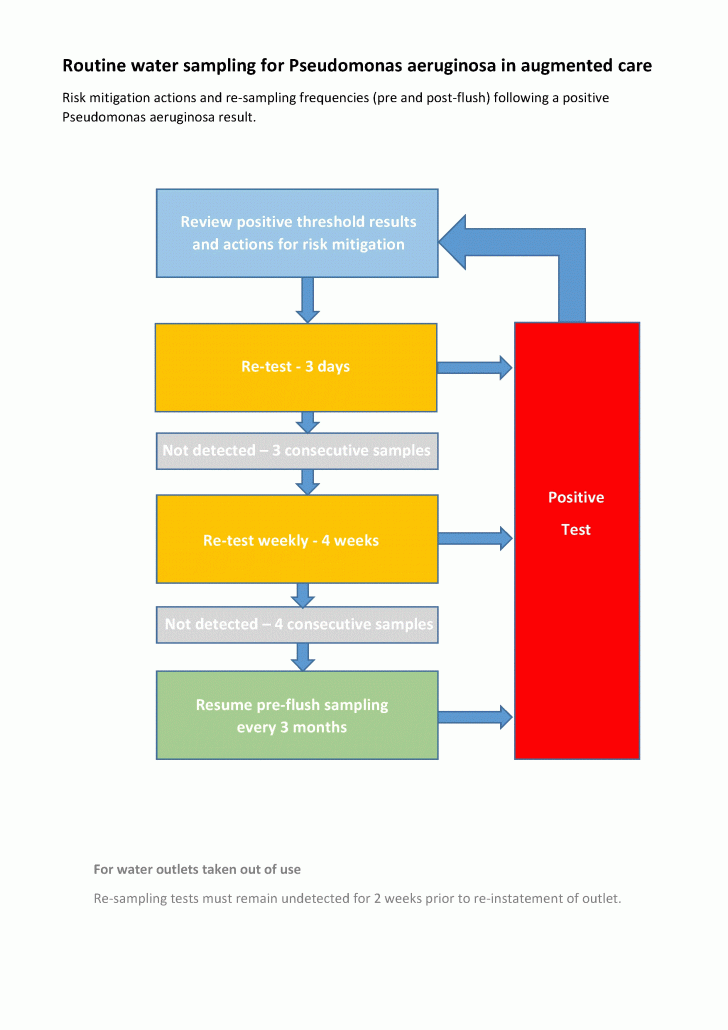
Pseudomonas positive re-testing and risk mitigation action plan
Remedial steps to take following a positive Pseudomonas aeruginosa test
In some cases, the Water Safety Group (WSG) may decide that the outlet does not need to be taken out of service. A microbiological point of use (POU) filter might be ideal to fit to the outlet concerned, to tackle the raised levels of bacteria. Further testing would then determine whether the filter is having the desired effect.
In many cases, though, a positive Pseudomonas result occurs because the outlet in question hasn’t been used as often as it should have been. This can increase the risk of stagnant water and biofilms within the pipework and outlet. Such conditions allow for an increased risk of bacteria – including Pseudomonas aeruginosa and Legionella – to multiply. Bacteria can use biofilms for protection from biocides and as a food source, while the lack of water flow makes it easier for bacteria of all kinds to multiply.
Regular flushing and how to deal with little or unused water outlets
It is best to remove any water outlet that is never used, although there are many cases where even only occasional use must be accounted for. Regular flushing is the best way to maintain a safe outlet and to minimise the chances of obtaining positive tests for Pseudomonas aeruginosa and other waterborne bacteria. So, if a positive test does occur, one area to look at would be the flushing actions currently taken. Are they regular and sufficient? If they are, and yet positive tests are still being found, may be likely that the flushing process is not being done properly or the outlet has been colonised.
Regular testing for Pseudomonas should aim to reduce the bacterial count to between 1-10 cfu per 100ml tested. If this occurs and can be supported over several weeks, the outlet can be put back into service. Of course, if the outlet is only rarely used and alternative outlets would suffice, removing the outlet completely would be the better course of action.

Leading healthcare water safety specialists
The expert team of water safety specialists at Legionella Control International support those responsible for the control of waterborne pathogens including legionella and Pseudomonas in hospitals, healthcare and other workplace environments, helping them to protect people and so meet their health and safety obligations in this specialist area.
We are experienced in the role of Authorising Engineer (Water) and deliver expert water safety risk assessments for Pseudomonas, Legionella and other waterborne pathogens. We also offer water quality testing, independent compliance auditing, water safety training and other risk management services that help keep staff and others safe.
If you would like to speak with one of our water safety specialists about managing your Pseudomonas risks, risk assessments or training call us today on 0330 223 36 86 or contact us here …

