• Online training login
t: 0330 223 36 86     e: [email protected]
Legionella Control International
  • Home
  • Services
  • Knowledge
  • Legionnaires
  • About
  • Contact
  • Click to open the search input field Click to open the search input field Search
  • Menu Menu
You are here: / Home / Knowledge / Guidance / Can Car Washes Spread Legionnaires Disease?

Can Car Washes Spread Legionnaires’ Disease?
Can Car Washes Spread Legionnaires Disease?

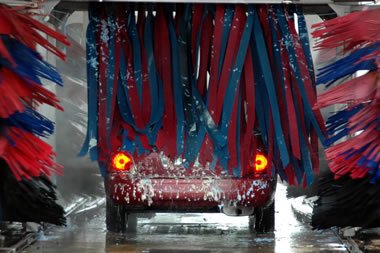
If you’ve ever asked yourself is my local car wash safe from the dangers of Legionnaires’ disease then read on. For many of us, washing our car is a job to be done on the weekends. Many people wash theirs by hand using hoses, buckets, and sponges on their driveways and outside their homes. Others go to an automatic car wash to take the hard work out of the task… but is it safe?

Most people will head to a car wash and have no issues whatsoever. They’ll get their car cleaned and that’s that. But recent reports have noted that a couple of people in Italy contracted Legionnaires’ disease – and it is believed they did so after visiting a car wash.

  • Learn more about Legionnaires’ disease here

Are car washes dangerous?

The answer to this question is no – and it is important to point this out. To date we have heard of no incidents where a Legionnaires’ case has arisen in the UK directly from a vehicle wash, and this story in Italy is the first we have heard occurring anywhere.

Conditions for legionella bacteria to grow

However, car washes by their very nature use a lot of water which is used as part of the washing process, the used water is then recycled and stored, sometimes for long periods without circulation which can cause it to stagnate. As part of their operation they also create mist and spray, and these are all conditions that can encourage the growth of legionella bacteria, which could then easily be dispersed through a contaminated water spray (or aerosol) to be inhaled by someone close by.

The car wash, in this instance, is no different from any other water system that creates a spray or mist. Cooling towers, decorative fountains and showers are similar in this respect.

Are UK car washes safe from Legionnaires’ disease?

The good news is that Health and Safety regulations in the UK are written to ensure business owners must comply with requirements regarding the control of legionella bacteria and other associated risks. The Health & Safety Executives ACOP L8 covers what you need to do and it is a recommended read if you’re not already familiar with your legal obligations in this area.

  • Take a more detailed look at the ACOP L8 here

Any business owner whose company has a water system, from a car wash to a cooling tower, should have an up to date legionella risk assessment in place covering the water systems at their premises. They should also have a system whereby they can check bacteria levels and treat the water to keep dangerous bugs in-check and so keep the system as safe as possible. It is only when such procedures are not followed that there may be a risk that legionella bacteria could multiply beyond safe limits and so increase the risks from Legionnaires’ disease.

  • Learn more about the legionella risk assessment process

Cleaning your car the old fashioned way

If you are now wondering whether to forget about taking your car to the car wash, do remember that cleaning it the old fashioned way does have its risks. Garden hoses filled with stagnant water and left out in the sun could pose an even greater risk. People have contracted Legionnaires’ disease after coming into contact with spray from their garden hose, so do store it dry, and flush it through thoroughly before using it to wash your car.

  • Gardner contracts Legionnaires’ from hose pipe

What to do if you own a car wash

In the UK car washes are safe, but it is always wise for business owners to be aware of the potential risks and implement the precautionary measures highlighted by the Health & Safety Executive to protect their customers, staff and others.

Legionella and water safety specialists

Our teams of water safety specialists support those responsible for the control of waterborne pathogens including Legionella bacteria across all regions of the UK and internationally. We deliver professional water safety risk assessments, water testing, independent compliance auditing, City & Guilds training and other environmental risk management services that help keep people safe.

If you have questions about any of the issues raised above or you would like to speak with one of our legionella specialists please call us today on 0330 223 36 87 or contact us here.

Search Search

Expert resources…

  • Legionella & other pathogens
  • Regulatory compliance
  • Expert guidance
  • International
  • Legionnaires’ disease
  • Legionella training
  • Glossary of terms
  • FAQ
  • News

REVIEWS

4.8
Legionella Control International is rated 4.8 out of 5 stars (based on 182 customer reviews)
Read our reviews

Get in touch...

Legionella Control International
Warren Bruce Court
Warren Bruce Road
Manchester M17 1LB
United Kingdom

Manchester: +44 (0) 161 877 05 86
London: +44 (0) 203 637 47 48
Email: [email protected]

Legionella newsletter...

A simple and convenient way of keeping up to date with the latest Legionella news, new legislation, best practice, R&D and much more…

Useful downloads…

  • HSE ACOP L8 – Control of Legionella
  • HSG274 Part 1 – Evaporative Cooling
  • HSG274 Part 2 – Hot & Cold
  • HSG274 Part 3 – Other Risks
  • Positive Legionella Tests – What To Do?
  • HSG282 – Spa Pools
  • Legionnaires’ – Duty Holders Guide
  • Health & Safety – Care Homes
  • Scalding Risks – Health & Social Care
            © Copyright 2026 - Legionella Control International Ltd.
  • Link to X
  • Link to Facebook
  • Link to LinkedIn
  • Home
  • About
  • Contact
  • FAQ
  • Disclaimer
  • Privacy
  • Modern Slavery
  • Reviews
  • Sitemap
Link to: Pontiac Fever: The Lesser-Known Relative of Legionnaires’ Disease Link to: Pontiac Fever: The Lesser-Known Relative of Legionnaires’ Disease Pontiac Fever: The Lesser-Known Relative of Legionnaires’ DiseasePontiac Fever & Legionnaires’ Disease Link to: Managing Legionnaires Disease in Schools, Colleges & University Buildings Link to: Managing Legionnaires Disease in Schools, Colleges & University Buildings Managing Legionnaires Disease in SchoolsManaging Legionnaires Disease in Schools, Colleges & University Buildi...
Scroll to top Scroll to top Scroll to top

This site uses cookies. By continuing to browse the site, you are agreeing to our use of cookies.

OKLearn more

Cookie and Privacy Settings


How we use cookies

We may request cookies to be set on your device. We use cookies to let us know when you visit our websites, how you interact with us, to enrich your user experience, and to customize your relationship with our website.

Click on the different category headings to find out more. You can also change some of your preferences. Note that blocking some types of cookies may impact your experience on our websites and the services we are able to offer.

Essential Website Cookies

These cookies are strictly necessary to provide you with services available through our website and to use some of its features.

Because these cookies are strictly necessary to deliver the website, refusing them will have impact how our site functions. You always can block or delete cookies by changing your browser settings and force blocking all cookies on this website. But this will always prompt you to accept/refuse cookies when revisiting our site.

We fully respect if you want to refuse cookies but to avoid asking you again and again kindly allow us to store a cookie for that. You are free to opt out any time or opt in for other cookies to get a better experience. If you refuse cookies we will remove all set cookies in our domain.

We provide you with a list of stored cookies on your computer in our domain so you can check what we stored. Due to security reasons we are not able to show or modify cookies from other domains. You can check these in your browser security settings.

Google Analytics Cookies

These cookies collect information that is used either in aggregate form to help us understand how our website is being used or how effective our marketing campaigns are, or to help us customize our website and application for you in order to enhance your experience.

If you do not want that we track your visit to our site you can disable tracking in your browser here:

Other external services

We also use different external services like Google Webfonts, Google Maps, and external Video providers. Since these providers may collect personal data like your IP address we allow you to block them here. Please be aware that this might heavily reduce the functionality and appearance of our site. Changes will take effect once you reload the page.

Google Webfont Settings:

Google Map Settings:

Google reCaptcha Settings:

Vimeo and Youtube video embeds:

Other cookies

The following cookies are also needed - You can choose if you want to allow them:

    Download our Legionella Risk Assessment Checklist for business owners, landlords, property managers and health and safety specialists and start managing your legionella risk today.