Practical Legionella Guidance for Retailers

Managing Legionella risk is a critical part of running a safe and compliant retail property. From small, self-contained shops to large, multi-unit retail environments, any premises with water systems has the potential to present a risk if those systems are not properly managed. Retailers and property managers have clear legal responsibilities to protect staff, customers and visitors from exposure to Legionella bacteria, making effective risk identification, assessment and control essential to day-to-day operations.
This article provides practical guidance for retailers on how to meet those responsibilities. It explains what Legionella is and how it can affect health, clarifies who holds legal responsibility in different retail settings, and explores the key risk factors commonly found in retail water systems. It also outlines the importance of carrying out a suitable Legionella risk assessment, implementing proportionate control measures, maintaining a written scheme of control, and considering specialist support where systems are complex or resources are limited.
A version of this article highlighting the need for Legionella control in retail premises first appeared in Legionella Control International’s newsletter. To get it in your inbox, sign up here.
Managing Legionella in retail property
If you own or manage retail property, you must ensure that you consider and reduce or remove all water related risks that could be present involving Legionella bacteria. Under health and safety law you have a responsibility to your staff and to customers to make sure that they are not put at risk of being exposed to Legionella bacteria.
In this guide, we’ll look at the risk factors you must consider. We’ll also focus on Legionella risk assessments, training, and what you must do to ensure your retail premises are always safe to visit and use, and you stay fully compliant with the law.
What is Legionella bacteria?
Legionella is a bacterium that is found in natural water sources such as rivers and ponds. It is also found in manmade water systems, and it is here that it may pose a risk if steps are not taken to reduce and control its presence.
What is Legionnaires’ disease?
Legionnaires’ is a disease caused when someone inhales Legionella bacteria into their lungs, usually in the form of a contaminated water aerosol or fine spray. It is a type of pneumonia that is most likely to seriously affect those who are in their fifties or older, as well as those who have weaker immune systems. you are also more likely to contract the disease if you smoke or have a chronic health condition.
Legionella bacteria can also cause Pontiac fever. This is far less serious than Legionnaires’ disease and can present in much the same way as ‘flu.
Identifying the duty holder responsible for retail property
The duty holder is usually the person responsible for managing Legionella risks and ensuring an organisation fulfils all its duties and obligations in the eyes of the law. The landlord may be responsible for this in cases of multi-occupied premises such as shopping centres where one or more retail outlets exist, and there are communal areas or shared water services.
However, if you run or manage larger or self-contained retail outlets, you may be deemed the duty holder. If so, you will need to make sure you conduct a Legionella risk assessment that considers all the risk factors posed by the water systems.
Focusing on the Legionella risk assessment in retail environments
The larger the store or outlet is, the more likely it is that it will have a more complicated water system to review. It may have any or all the following features present:
- Customer toilets and facilities
- Baby changing facilities
- Staff toilets and showers
- Staff food or drink preparation areas
- Food or drink services for customers
- Air conditioning
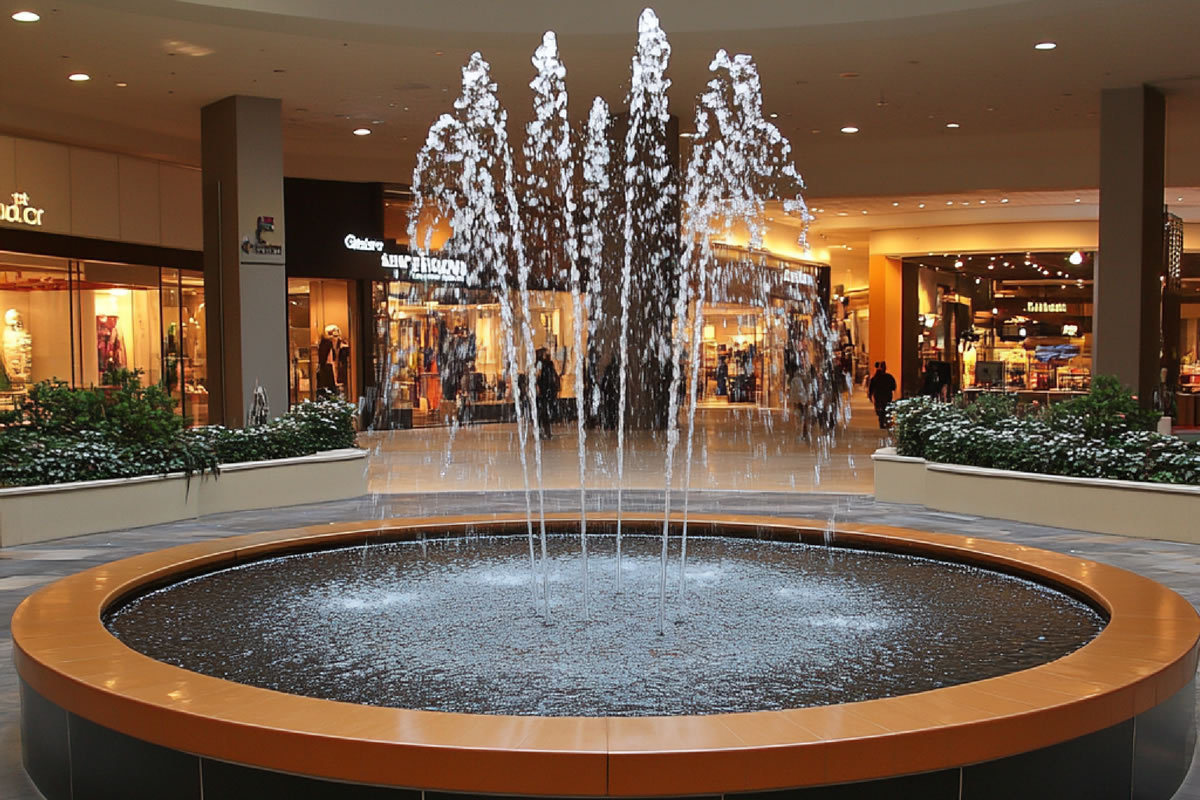
- Decorative water features
- Vehicle wash facilities
- Sprinkler systems
The size of the retail outlet will often determine which of the above facilities are present. For instance, if you manage a large multi-unit retail outlet, you may also need to consider cooling towers.

Removing or reducing Legionella risk factors in retail property
Once you have identified all potential risk factors for Legionella bacteria, you must plan to remove as many of them as possible. Where this can’t be done effectively, the risks must be managed.
In some instances, this might be simple. Let’s say the staff room has been revamped and now has one or two dead legs attached to the water system that are no longer used. The best course of action would be to have those removed, as that will remove the risk associated with them.
In contrast, you might have a staff shower that isn’t regularly used, but you don’t want to get rid of. In this case, you should take steps to make sure it is regularly cleaned and flushed. This means it can remain available, but it will not provide an opportunity for stagnant water to sit in infrequently used pipework. You may introduce a scheme whereby it is flushed through once a week to keep the pipework clean and clear.
This is a common risk factor, as Legionella bacteria will more readily multiply in stagnant water. If you remove that factor, the occasional usage won’t be an issue.
Creating a written scheme of control to manage Legionella
A written scheme of control is a must as it sets out how you intend to manage the Legionella risk in your retail property. You are required to have a control scheme to show you are managing your water systems and controlling waterborne bacteria, including Legionella.
The document should include the Legionella risk assessment you have conducted, along with drawings or plans (called schematics) of the water systems under your control. You should also add details of regular maintenance, testing and monitoring tasks required to ensure the system is running safely and the risk of Legionella is kept low. This should include details of any water treatments added and when this should be done.
Make sure you provide details of the duty holder, the responsible person, deputies and all other staff members who are involved in taking responsibility for managing a safe water system. For example, if you are not in on a particular day, it should be clear who oversees relevant tasks relating to the water systems.
You should also list all relevant training that each member of staff has had. Note the dates of any refresher training as well, as this should be regularly undertaken to ensure staff have the proper knowledge and skills in water safety.
Finally, you should have a plan of action in place to describe what you will do if the existing water treatment is not sufficient, or problems are encountered.
Consider whether to hire the services of an external company
Water systems run the gamut of being simple things to complex ones. A lot depends on the size and complexity of the retail outlet, its age, and whether it has gone through any changes, updates, or upgrades.
Put simply, if you are the duty holder or responsible person for a large retail outlet or property portfolio, you may not feel you have the required knowledge, experience or resources to take on a Legionella risk assessment. You may wish to undertake training on various aspects of water safety, but in the case of large buildings or multiple properties, it may be prudent to seek advice and support from an external company such as Legionella Control International.
This means you can request a Legionella risk assessment be done, highlighting anything you must do to ensure you maintain excellent water safety within the building, and comply with current health and safety law. It also means that nothing will be missed, since you are relying on the expertise of someone who likely has many years of experience in the industry.

Ensuring Legionella compliance in your retail property
It is perfectly legal, and indeed, advised in the case of bigger or multiple retail outlets and businesses, to hire someone else to handle your Legionella risk assessment, and approach to water safety on your behalf. Make sure you do adequate research in this area, as it will still be your responsibility to ensure the water systems in your retail properties remain safe for everyone to use.
In conclusion
Managing Legionella risk in retail property is not a one-off exercise, but an ongoing responsibility that sits firmly with those who own, manage or control the premises. By understanding where risks can arise, keeping water systems under regular review, and putting effective control measures in place, retailers can significantly reduce the likelihood of Legionella bacteria becoming a threat to health. This proactive approach not only protects staff and customers but also demonstrates a clear commitment to meeting legal and moral obligations.
Whether you oversee a single store or a wider retail portfolio, taking Legionella control seriously helps ensure your premises remain safe, compliant and welcoming at all times. With the right knowledge, training and support in place, Legionella risks can be managed effectively and proportionately, allowing you to focus on running your business with confidence.
Leading specialists in Legionella control for complex environments
For retailers seeking reassurance that their water systems are being managed correctly, support from an experienced specialist can make a significant difference. Legionella Control International is a leading water safety specialist, supporting duty holders and responsible persons across the retail sector and other commercial environments. Our expert teams help ensure water systems are safe to use, protecting staff, customers and visitors from the risks associated with Legionella and other waterborne pathogens.
With extensive experience working across complex, multi-site and high-footfall properties, we provide practical, proportionate solutions tailored to the needs of retail environments. Our services include Legionella risk assessments, water safety auditing, written schemes of control, training and ongoing compliance support.
If you have concerns about Legionella risks within your retail property or would like to speak with one of our water safety specialists, please call us today on 0330 223 36 86.

