
How Does Legionella Spread to Increase the Risks from Legionnaires’ Disease?
Legionnaires’ disease is a potentially serious lung infection caused by Legionella bacteria, contracted through the inhalation of fine water droplets or vapour containing the bacteria. While it naturally occurs in the environment, the danger arises when Legionella is allowed to grow and spread unchecked within manmade water systems, particularly those that are poorly maintained or left to stagnate. Understanding how this spread occurs is key to preventing outbreaks that can pose serious risks to human health.
This article explores how Legionella bacteria spread inside water systems and what conditions make their proliferation more likely. It outlines the ideal environments for bacterial growth, the role of water temperature and stagnation, and how aerosols become the main vehicle for infection. It also looks at how poor cleaning, disinfection, and maintenance practices contribute to the problem, and offers guidance on how to reduce the dangers through risk assessment and effective water system management.
A version of this article asking how Legionella spreads in a water system to raise the risks from Legionnaires’ disease first appeared in Legionella Control International’s newsletter. To get it in your inbox, sign up here.
The problem of Legionnaires’ disease
Most people have heard of Legionnaires’ disease. It is a potentially serious lung infection caused by Legionella bacteria. People contract the disease (and the less serious Pontiac fever) by inhaling fine water droplets, mist, or water vapour (aerosols) that contains the bacteria.
The disease got its name from a major outbreak at an American Legion convention in Philadelphia, USA in 1976. Although other outbreaks were likely to have occurred prior to that date, this was the first major occurrence where many people fell ill and some died. It also led to the identification of the Legionella bacteria.
To understand how to avoid outbreaks of Legionnaires’ disease, we must understand how Legionella bacteria spreads. It is harmless in small amounts; indeed, it occurs naturally in ponds, rivers, and lakes, where it typically causes no issues.
The problem comes when Legionella finds its way into manmade water systems serving buildings with hot and cold water. If these water systems are not cleaned, maintained, and treated to keep waterborne bacteria under control, they are likely to become a health hazard.

Understanding hot and cold water systems and the associated Legionella risk factors
All manmade water systems carry the risk of being affected by numerous waterborne bacteria, including Legionella. This applies to all aspects of a water system, from simple components such as taps and shower heads to large cooling towers serving a factory or other premises. The more complicated a water system is, the more challenging it is to maintain water safety.
It’s not just complex water systems serving hospitals, offices, hotels, factories, and other facilities that are at risk of Legionella though. A straightforward hot and cold water system serving a school could also pose a risk if it is not properly maintained and treated to combat the issue.
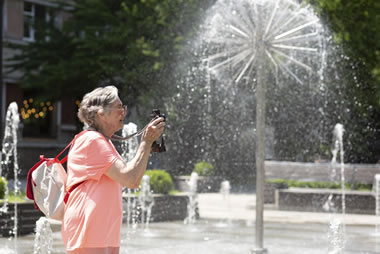
Elsewhere, things such as decorative water fountains can create the ideal conditions for Legionella bacteria to flourish and spread. The same applies to garden hoses if water is left inside them and the sun is allowed to warm up that water, thereby creating good conditions for the proliferation of Legionella bacteria.
How does Legionella spread inside a water system?
Most manmade water systems will have some Legionella bacteria present. However, they will typically be at safe levels. Such levels can be achieved by conducting a Legionella risk assessment, identifying all relevant risks relating to Legionella and other waterborne bacteria, and tackling those risks. This will ensure the bacteria remains at safe levels and does not get the chance to multiply and spread to cause harm to human health.
There are several scenarios that are most likely to lead to Legionella spreading through a water system. These are detailed below.
Water that is between 20 – 45 degrees Celsius:
This temperature range creates the ideal conditions for Legionella bacteria to grow and multiply. The bacteria remain alive at temperatures dropping below 20 degrees Celsius but cannot grow at this point. If the temperature goes above about 50 degrees Celsius, growth is limited, and when the temperature gets too hot, they will die.
Therefore, hot water supplies should be stored at 60 degrees Celsius and be at least 50 degrees Celsius when measured at outlets (55 degrees Celsius in healthcare properties). Cold water should never rise above 20 degrees Celsius.
Water stagnating in infrequently used parts of the system:
Legionella can more readily multiply in still or stagnant water. While we tend to think of stagnant water sitting in ponds and other outdoor locations, it can become stagnant in pipework and other infrequently used parts of a water system as well.
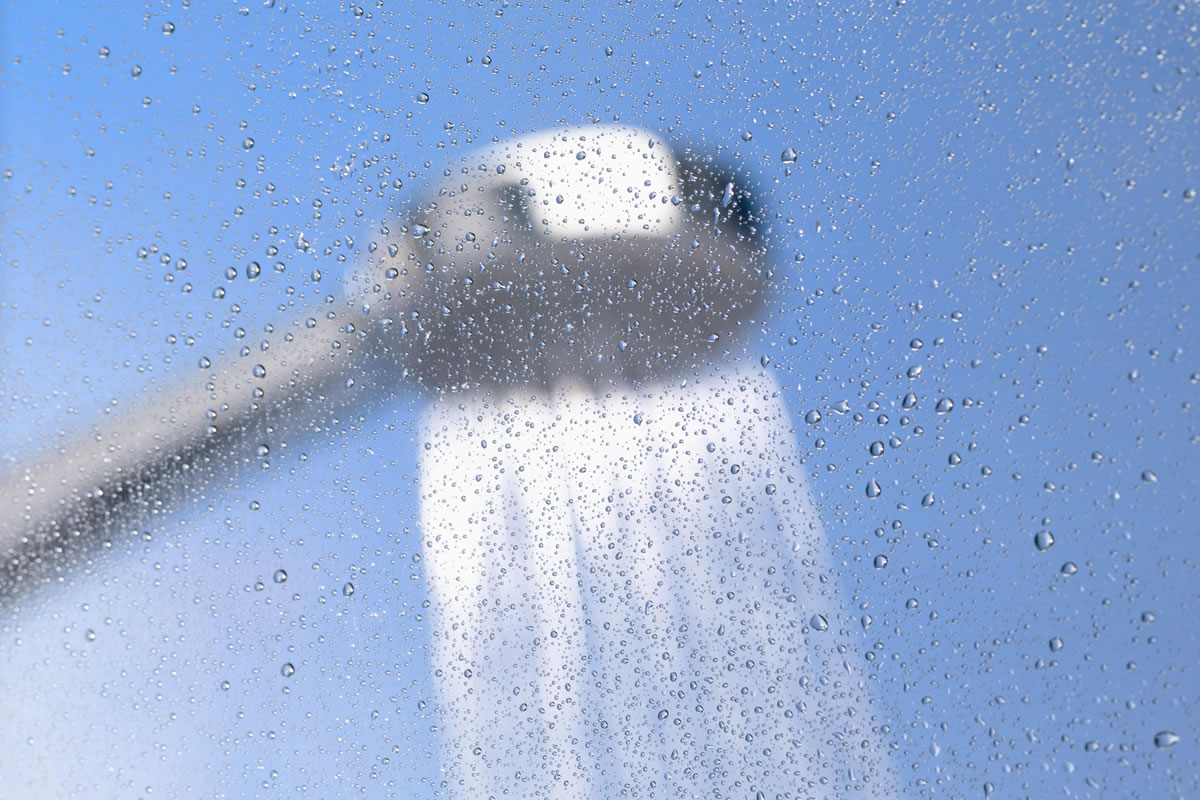
For example, if a shower is not often used, water may sit in there for ages. This will give any Legionella bacteria present the opportunity to grow, especially since there is also a greater chance of biofilms developing there.
Inadequate water disinfecting processes:
All manmade water systems should be sufficiently disinfected to ensure they pose no risk to those using them. This applies to all systems used in businesses, commercial settings, healthcare settings, and other scenarios. Regular dosing will ensure any bacteria present is at safe levels.
Infrequent or inadequate cleaning procedures:
Water systems that are not properly cleaned – or not cleaned often enough – will begin to develop biofilm on the insides of pipework, outlets and other components. This will act as a food source for Legionella and other bacteria. Pipework that is not often used will also make it easier for biofilm to form.
Poor or infrequent maintenance:
Water systems must be regularly maintained to minimise the occurrence of biofilms, debris, and other things that could provide a food source for Legionella bacteria.
How does Legionella spread once it is established?
Once the bacteria have contaminated the inside a water system and started circulating, they can be sent into the air via outlets such as showers, spray taps, water fountains, hot tubs, and cooling towers which create and discharge water vapour, steam, spray, and other microscopic water droplets into the air. These contaminated plumes can then be inhaled by anyone in the vicinity.
Legionella bacteria are not typically spread from one person to another. There are situations where many people fall ill if the bacteria are spread within water vapour that is sent over a large area. This can occur with cooling towers. Anyone who comes into contact with any contaminated water vapour can inhale the bacteria. This could involve a water fountain or even a shower head.
How to reduce the spread of Legionella in manmade water systems
The first line of defence is to conduct a Legionella risk assessment of the entire water system. This should be done by someone with sufficient knowledge and experience. The assessment should identify all risks and these should be removed where it is practical to do so. When removal is not practical, steps should be identified and taken to reduce the risk to an acceptable level.
Minimising the risks associated with Legionella bacteria is an ongoing process. Keeping the number of bacteria present in a water system at a safe (low level) is one of many steps that combine to ensure any water droplets or vapour are safe for those in the area. It’s often impossible to avoid inhaling any vapour or water droplets in the air. You may not even realise they are there. So, by taking action to prevent Legionella bacteria from multiplying and spreading, it becomes easier to guard against an outbreak to start with.
Leading water safety specialists
Legionella Control International is a world leading water safety specialist, supporting those responsible for the control of Legionella and other waterborne pathogens in the workplace. Our expert water safety teams help keep water systems safe, protecting workplace health and safety.
If you are concerned by any of the issues raised here or you would like to speak with one of our water safety specialists, please call us today on 0330 223 36 86.

